
Neveríte AI v terapii? Dobre.
My tiež nie, keď predstiera istotu.
Existuje jedna veta, ktorá sa v rozhovoroch s terapeutmi objaví zakaždým, keď príde na tému umelej inteligencie v ordinácii: „Nebudem dôverovať niečomu, čomu nerozumiem.”
Nejde o technofóbiu. Je to zdravý klinický inštinkt. Terapeut je zodpovedný za každú hypotézu, ktorú si vytvorí o pacientovi - má teda právo, a vlastne aj povinnosť, vedieť, odkiaľ táto hypotéza pochádza.
Väčšina nástrojov AI sa však správa ako čierna skrinka: vložíte dáta, vyjde hotový výsledok a cesta z jedného k druhému zostáva skrytá - pochovaná v miliónoch parametrov, ktoré nikto nedokáže preskúmať. V počasovej aplikácii to nie je problém. Pri práci s ďalším človekom áno.
Existuje aj druhá, nebezpečnejšia pasca. Jazykový model, ktorý narazí na medzeru v dátach, má silnú tendenciu ju vyplniť - pridať to, čo sa hodí, čo je pravdepodobné, čo vyzerá ako učebnicový obraz. Presne to je halucinácia. A v klinickom kontexte je nebezpečnejšia ako ticho, pretože znie dôveryhodne.
Východiskový bod je teda jednoduchý: nástroj AI v terapii si nezíska dôveru tým, že je sebaistý. Získa si ju vtedy, keď je úprimný - ukáže zdroj, ukáže uvažovanie a prizná, čo nevie.
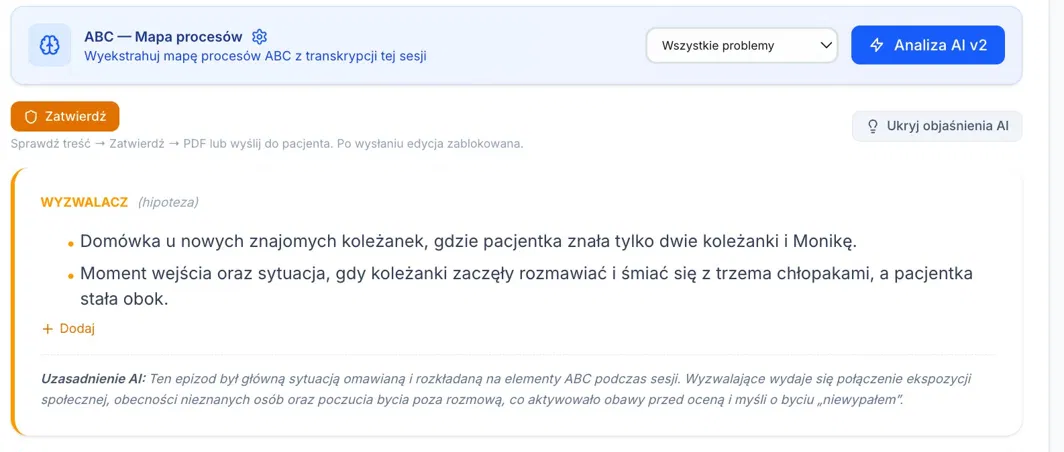
Najlepšie sa to dá vidieť na konkrétnom prípade. Mapa, ktorou tento článok otvárame, je fragment, ktorý systém vygeneroval z prepisu sedenia - prejdime si jej časti.
Systém si nevymýšľa myšlienky pacienta - cituje ich
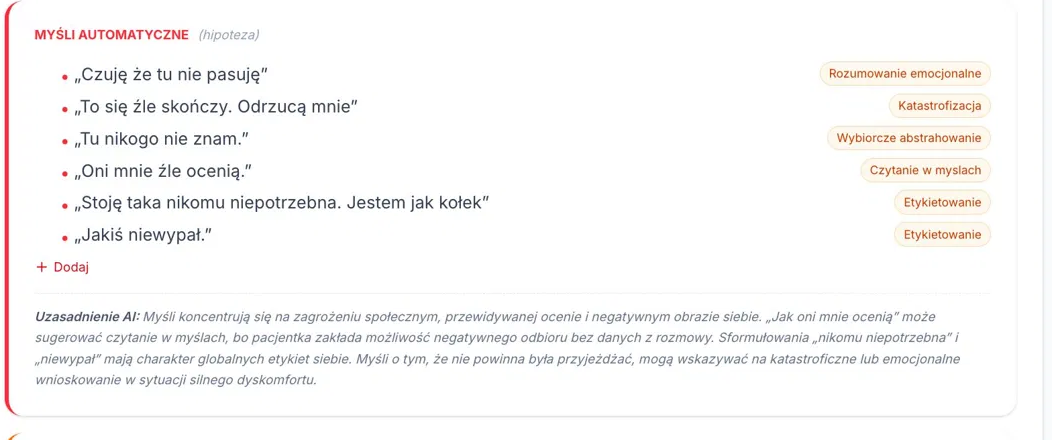
V sekcii automatických myšlienok sa nikde nenachádza „interpretácia od AI”. Objavujú sa doslovné výroky pacienta z prepisu: „Šiel/šla by som tam a nič by som nenapísal/a”, „neprešiel/prešla by som”, „som zlyhanie”. Pod tým, v poli AI Rationale, systém vysvetľuje, prečo priradil tieto myšlienky do danej kategórie a aké kognitívne skreslenia za nimi môžu stáť.
Toto je opak čiernej skrinky. Namiesto verdiktu odniekiaľ dostáva terapeut správu: tu je zdroj - overte si to sami. Overenie trvá pár sekúnd, pretože zdroj je priamo na dosah.
Nie je to verdikt - je to hypotéza
Pri každej sekcii stojí jedno malé, no kľúčové slovo: (hypotéza). Systém neoznamuje: „toto je spúšťač”. Hovorí: toto je pravdepodobne spúšťač - overte si to.
Rovnaký tón sa vracia aj v zdôvodneniach: „zdá sa”, „môže naznačovať”, „vyžaduje si ďalšie klinické overenie”. Nejde o jazykovú opatrnosť pridanú na koniec. Je to zabudovaný postoj - epistemická pokora zapísaná priamo do spôsobu, akým systém formuluje svoje závery. Rozhodnutie vždy zostáva na strane terapeuta. Človek nikdy nevypadáva z procesu, ani na chvíľu.
A teraz to najdôležitejšie: čo systém robí, keď niečo nevie
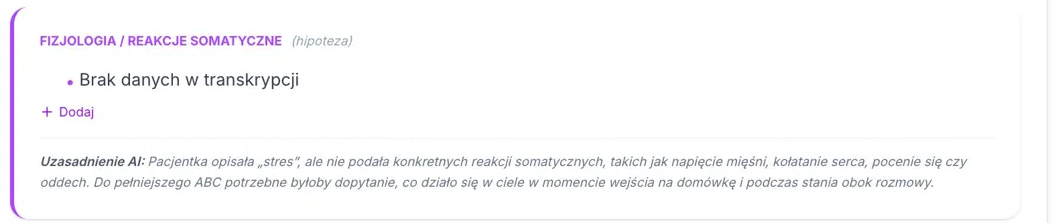
Pozrime sa na sekciu fyziológie a somatických reakcií.
Každý, kto pracuje s úzkosťou, pozná typický obraz: svalové napätie, zrýchlený tep, potenie, plytké dýchanie. Jazykový model by to jednoducho mohol doplniť - dokonale by to sedelo, znelo by to dôveryhodne, nikto by si to nevšimol.
Systém to nerobí. Napíše: „V prepise nie sú dáta.”
A potom urobí krok, ktorý mení všetko. V zdôvodnení nielenže priznáva medzeru, ale premieňa ju na klinický podnet: poznamenáva, že pacient opísal „stres”, ale neuviedol konkrétne telesné reakcie, a navrhuje, že plnohodnotnejšie ABC by si vyžadovalo opýtať sa, čo sa dialo v tele v momente vstupu a počas rozhovoru.
Toto je presne moment, v ktorom by bežný model halucinoval. ATS namiesto toho povie „neviem” - a ukáže terapeutovi, kde sa prepis končí a kde začína jeho vlastná práca.
Rovnaká precíznosť sa objavuje aj v sekcii emócií: tam, kde pacient uviedol číslo („stres 90/100”), systém ho zaznamená. Tam, kde neuviedol - pri smútku a žiali - jasne uvádza: „intenzita: neuvedená”. Rozlišuje, čo bolo zmerané, od toho, čo zmerané nebolo. Nepredstiera úplnosť.
Jeden postoj, nie tri funkcie
Zdroj. Hypotéza. Hranica.
Nejde o tri samostatné tlačidlá pripevnené k produktu. Je to jeden konzistentný spôsob, akým systém pristupuje ku klinickému materiálu už od začiatku: ukazuje, kde vie, čo vie, so svojimi závermi zaobchádza ako s hypotézami na overenie a otvorene označuje miesta, kde chýbali dáta.
Čierna skrinka funguje opačne - skrýva cestu a vypĺňa medzery, aby vyzerala isto. V ordinácii na to nie je súhlas.
Skepsa voči AI v terapii je opodstatnená. Cieľom teda nie je presvedčiť vás, aby ste AI dôverovali - cieľom je, aby nástroj sám dokázal, že sa dá overiť. Dôvera nevzniká zo sebaistoty. Vzniká z úprimnosti.
Tím Therapy Support