
Pseudonymizácia dát: dve vrstvy ochrany súkromia pacienta
Váš terapeut vie o vás veci, ktoré nikde inde nezapisujete.
Keď platforma AI analyzuje tieto rozhovory - čo presne sa posiela modelu?
V TherapySupport sme si túto otázku položili priamo. Bez dodatočných opatrení by mená pacientov, telefónne čísla, rodné čísla a adresy plynuli do Azure OpenAI - všetko v jedinej požiadavke modelu.
Preto sme vybudovali dvojvrstvový systém ochrany dát, ktorý je v súlade s požiadavkami GDPR a so štandardmi HIPAA a SOC 2.
Prvá vrstva - šifrovanie na úrovni databázy
Citlivé dáta pacienta sú uložené pomocou Always Encrypted v SQL Serveri. To znamená, že administrátor databázového servera nemá prístup k nešifrovanému obsahu stĺpcov obsahujúcich citlivé dáta. Šifrovacie kľúče sídlia výlučne v Azure Key Vault a nikdy neopustia dôveryhodné prostredie.
Druhá vrstva - pseudonymizácia pred odoslaním do AI
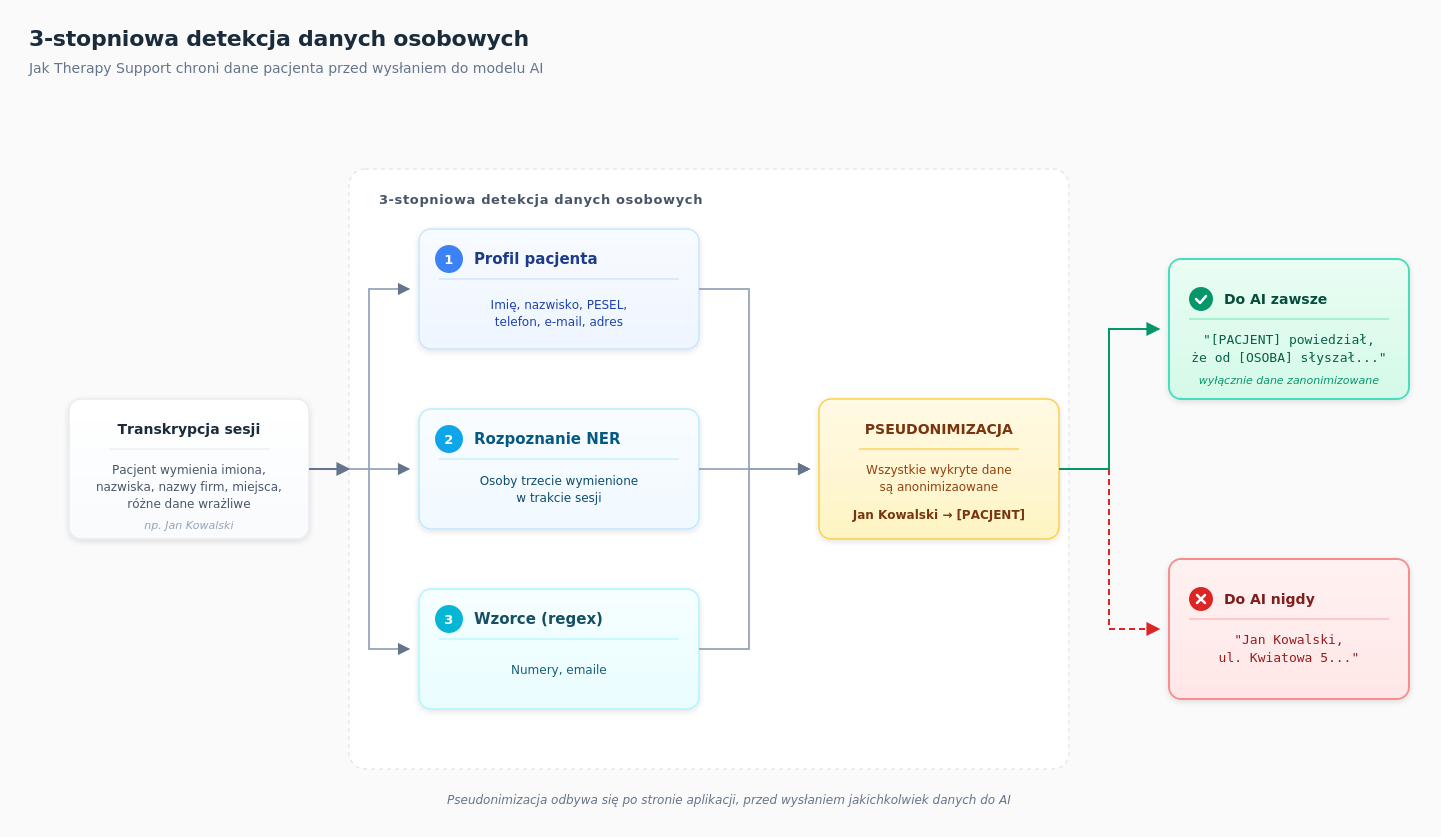
Skôr ako sa prepis sedenia odošle modelu AI, prechádza tromi vrstvami overenia. Systém identifikuje dáta z profilu pacienta, rozpoznáva tretie osoby spomínané počas rozhovoru - partnerov, kolegov - a detekuje telefónne čísla a adresy.
Každá identifikovaná osoba dostane pseudonym. Jan Kowalski sa stane [PATIENT]. Anna, kolegyňa z práce - [PERSON_1]. Model dostane súvislú históriu sedenia, no bez akéhokoľvek skutočného mena, čísla či adresy.
Model AI dostane úplný klinický kontext. Terapeut dostane spoľahlivú analýzu. Dáta pacienta zostávajú v našom systéme.
Prečo dve vrstvy, nie jedna
Šifrovanie chráni dáta v pokoji - v databáze. Pseudonymizácia chráni dáta v pohybe - v prompte, v logoch, v embeddingoch odosielaných modelu. Ide o dva nezávislé mechanizmy riešiace dva odlišné problémy. Ani jeden nenahrádza ten druhý.
V oblasti duševného zdravia znamená narušenie súkromia konkrétnu ujmu spôsobenú konkrétnej osobe - v momente, keď je najzraniteľnejšia. Preto záleží na každej vrstve ochrany.
#GDPR #HIPAA #SOC2 #AI #HealthTech #Privacy #Pseudonymization #Microsoft #AlwaysEncrypted #SQLServer #TherapySupport