
Kaip įsivaizduojame profesijos ateitį. Tarp baimės ir potencialo.
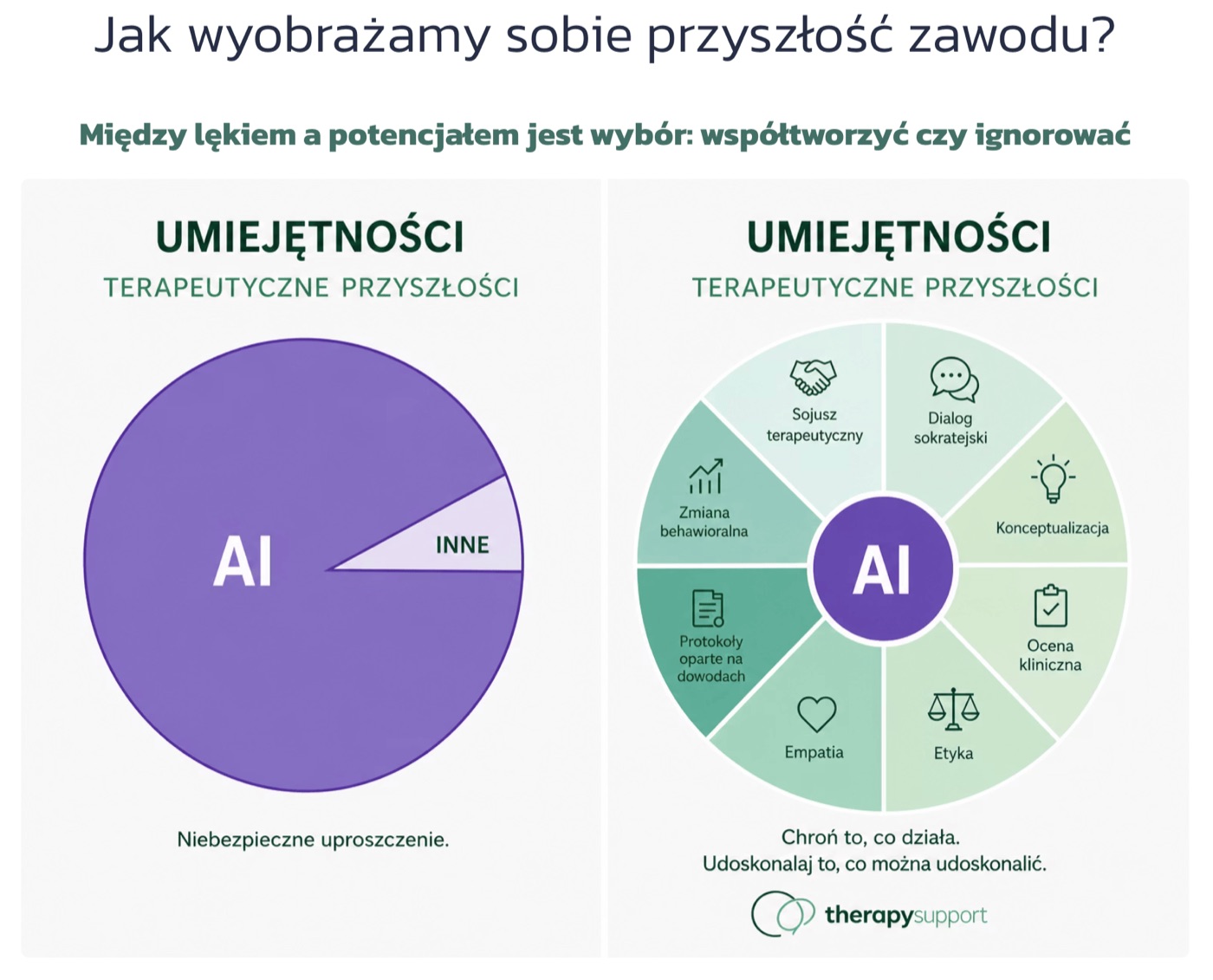
Diskusija apie dirbtinį intelektą psichoterapijoje dažniausiai vyksta dviejų kraštutinių rėmų viduje. Pirmasis - baimė: vaizdas, kuriame algoritmas perima profesiją, o terapinės kompetencijos - santykis, metų metais kurta patirtis, klinikinis mąstymas - sumažinamos iki išnašos. Antrasis - nekritiškas entuziazmas: prielaida, kad įrankis išspręs problemas, kurios iki šiol reikalavo žmogaus. Abu šie rėmai pernelyg supaprastina tai, kas iš tiesų yra terapeuto darbas. Šį straipsnį atveriantis grafikas juos sąmoningai pateikia vieną šalia kito.
Kairioji pusė: pavojingas supaprastinimas
Pirmoji diagrama pateikia „ateities terapines kompetencijas” kaip beveik vienalytį AI lauką su liekamąja „kita” kategorija. Tai vizija, kurioje technologija užima kompetencijos vietą, o ne ją palaiko. Tai patogu, nes leidžia arba visiškai atmesti AI, arba juo pasitikėti be jokių ribų - abiem atvejais neteikiant jokių apribojimų. Ir būtent todėl tai klaidinama.
Dešinioji pusė: AI aplink kompetencijas, o ne vietoj jų
Antroji diagrama tas pačias ateities kompetencijas grupuoja pagal tai, kuo jos yra klinikinėje praktikoje: terapinis aljansas, sokratiškas dialogas, atvejo konceptualizacija, klinikinis įvertinimas, etika, empatija, elgesio pokytis ir įrodymais grįstas darbas. AI atsiduria centre ne kaip sprendimus priimantis agentas, o kaip palaikantis sluoksnis - atlaisvinantis terapeutui laiko nuo dokumentacijos ir medžiagos organizavimo, kad liktų laiko tam, kas išlieka išskirtinai žmogiška. Nė viena iš aštuonių kompetencijų nėra automatizavimo objektas.
Šis skirtumas turi empirinį pagrindą
Du dideli atsitiktinių imčių 2026 metų tyrimai rodo tą patį modelį. McFadyen ir kolegos (Communications Medicine), 540 žmonių tyrime, nustatė, kad generatyviu AI palaikoma KBT programa buvo naudojama dažniau ir ilgiau nei skaitmeninė kontrolinė medžiaga, o klinikinis efektyvumas buvo panašus. So ir kolegos (Journal of Medical Internet Research), trijų grupių 1187 žmonių tyrime, nepastebėjo reikšmingų skirtumų mažinant depresijos simptomus (PHQ-9), tačiau užfiksavo didesnį įsitraukimą AI palaikomoje grupėje.
Išvada nuosekli: AI palaikomi įrankiai didina paciento įsitraukimą, tačiau klinikinis rezultatas išlieka panašus į kontrolinę grupę. Įsitraukimas yra poveikio prediktorius, o ne pats poveikis.
Tačiau įdomiausias radinys susijęs su tuo, kas lemia paciento išlikimą terapijoje. So ir kolegų tiriamojoje analizėje, išlikimą lėmė modelio empatinė funkcija - emocijos atspindėjimas - su šansų santykiu, artimu dešimčiai (OR 9,99), o patariamoji funkcija reikšmingo poveikio neparodė. Taigi mechanizmas yra ne „tikslių patarimų davimas”, o emocijos atspindėjimas. Ir tai yra kompetencija, kurios šerdis lieka pas terapeutą.
Riba, kurią reikia brėžti sąmoningai
Pokyčio ignoravimas jo nesustabdys - tik užtikrins, kad jis įvyks be žmonių, geriausiai suprantančių, kas yra saugi, etiška, santykiu grįsta terapija. Atsakymas yra ne atsisakyti technologijos, o rinktis įrankius, kurių atitiktis yra dokumentuota, o ne tik deklaruojama.
Šia prasme grafike užrašytas principas - saugoti tai, kas veikia; tobulinti tai, ką galima patobulinti - yra ne rinkodaros šūkis, o operacinis kriterijus. Tarp baimės ir potencialo yra pasirinkimas: kurti kartu arba ignoruoti.
Saugoti tai, kas veikia. Tobulinti tai, ką galima patobulinti.
Šis tekstas analizuoja paskelbtus mokslinius duomenis ir nėra klinikinė rekomendacija. Therapy Support nėra medicinos priemonė pagal MDR (medicinos priemonių reglamentą) ir nepriima klinikinių sprendimų. AI platformoje palaiko dokumentaciją ir medžiagos organizavimą - visi klinikiniai sprendimai lieka terapeuto rankose.
Šaltiniai: J. McFadyen ir kt., Increasing engagement with cognitive-behavioral therapy (CBT) using generative AI: a randomized controlled trial (RCT), Communications Medicine 6, 129 (2026), nature.com/articles/s43856-025-01321-8. M. So ir kt., Effect of AI-Based Natural Language Feedback on Engagement and Clinical Outcomes in Fully Self-Guided Internet-Based Cognitive Behavioral Therapy for Depression: 3-Arm Randomized Controlled Trial, Journal of Medical Internet Research (2026), jmir.org/2026/1/e76902.